Taking a closer look: Ischemic stroke and the coagulation cascade
87% of all strokes in the US are ischemic.2 And when you consider that 1 in 5 stroke survivors will have a secondary stroke within 5 years, it’s important to understand the processes that contribute to risk.3,4
The coagulation cascade plays a central role in ischemic stroke, where pathologic thrombus formation within cerebral arteries leads to vessel occlusion and downstream ischemia.5
A thorough understanding of the coagulation cascade and its pathways is helpful to grasp how hemostasis may be uncoupled from thrombosis.6 This mechanism may help to prevent pathological clot formation while leaving hemostasis intact.
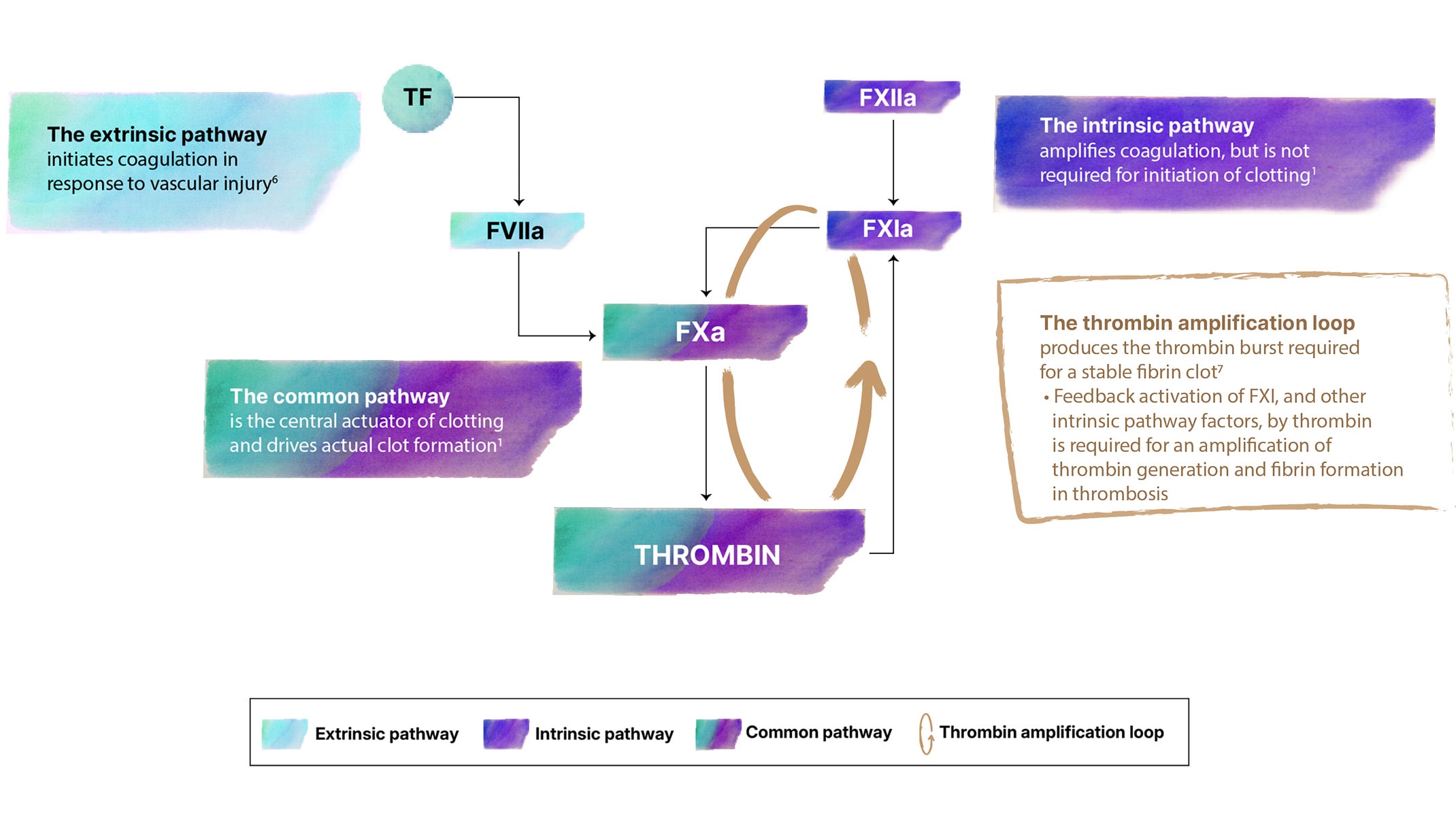
FVIIa, activated factor VII; FXa, activated factor X; FXI, factor XI; FXIa, activated factor XI; FXIIa, activated factor XII; TF, tissue factor.
Different clotting factors have different roles in pathologic thrombosis and bleeding potential1
- The coagulation cascade operates at the intersection of normal hemostasis and pathologic thrombosis1
- Some factors are critical for maintaining normal clotting, whereas others—particularly within the extrinsic pathway—appear to play a greater role in thrombus propagation than in bleeding potential1
Bleeding potential and the connection to thrombin generation and fibrin stability
- Inherited deficiencies of coagulation factors produce highly variable bleeding patterns8
- Clinical severity of bleeding depends less on pathway position and more on the factorʼs contribution to thrombin generation and fibrin stability7
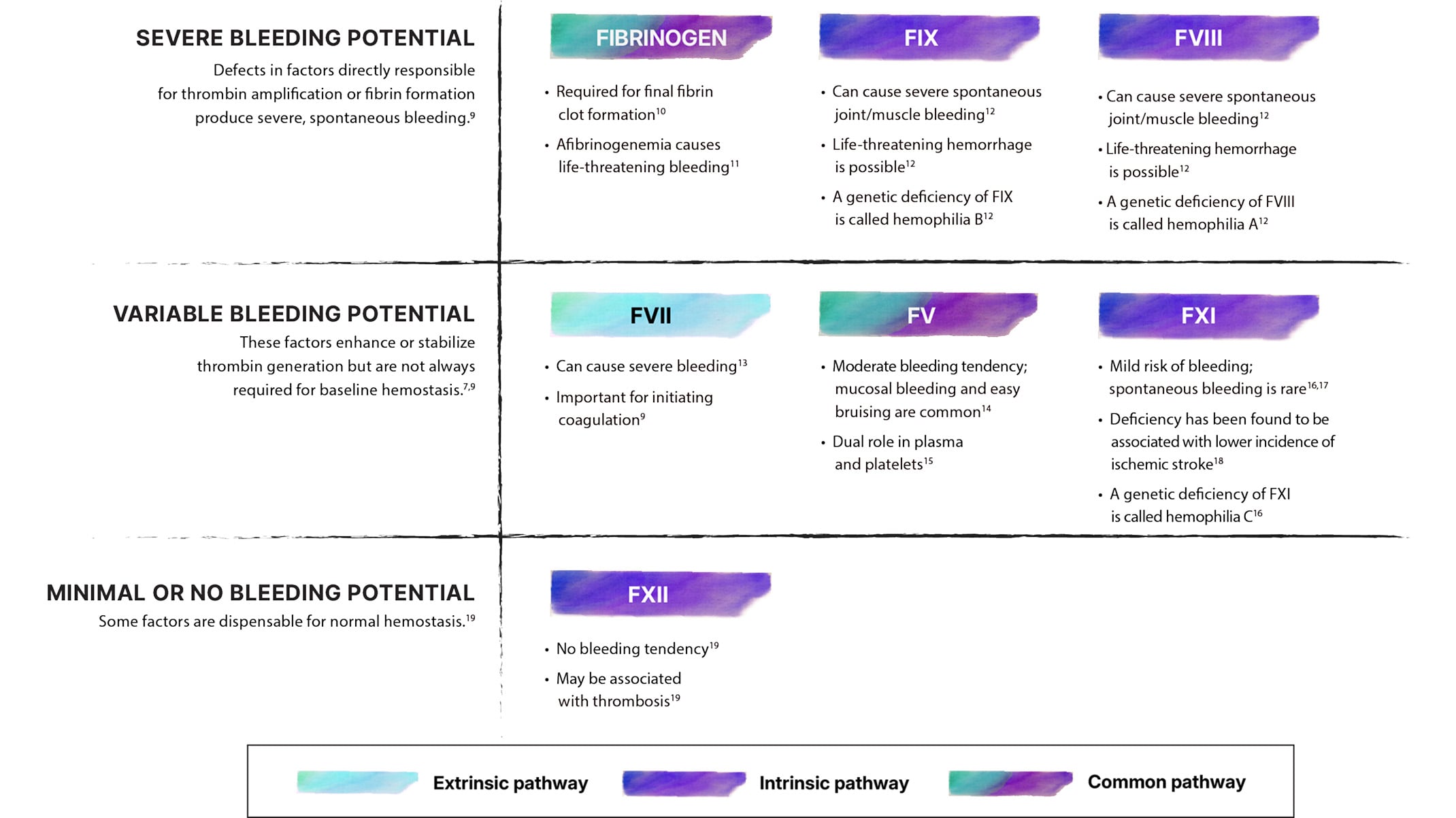
FV, factor V; FVII, factor II; FVIII, factor VIII; FIX, factor XI; FXII, factor XII.
Understanding the coagulation cascade and its pathways can help us appreciate how hemostasis may be uncoupled from thrombosis.
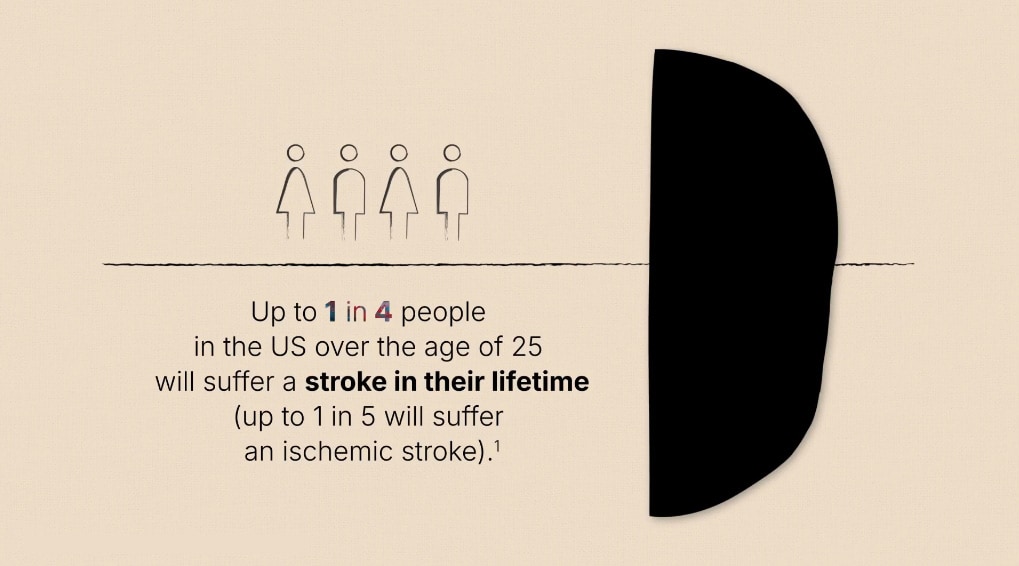
Burden of stroke
Challenges in secondary stroke prevention result in high rates of recurrence. How many of your patients are vulnerable to another stroke?
Test your stroke knowledge
How do you compare with your peers? Test your knowledge of stroke epidemiology and pathophysiology in the stroke epidemiology quiz.

Get connected with Bayer
Stay up to date with more information.
- Smith SA, et al. Crit Rev Biochem Mol Biol. 2015;50(4):326-336.
- Martin SS, et al. Circulation. 2024;149(8):e347-e913.
- Kolmos M, et al. J Stroke Cerebrovasc Dis. 2021;30(8):105935.
- Lakshminarayan K, et al. Stroke. 2011;42(6):1556-1562.
- Kuriakose D, et al. Int J Mol Sci. 2020;21(20):7609.
- Raffo C, et al. Euro Heart J Suppl. 2025;27(Suppl 3):iii46-iii53.
- Hoffman M, et al. Thromb Haemost. 2001;85(6):958-965.
- Peyvandi F, et al. J Thromb Haemost. 2012;10(4):615-621.
- Mann KG, et al. Arterioscler Thromb Vasc Biol. 2003;23(1):17-25.
- Mosesson MW. J Thromb Haemost. 2005;3(8):1894-1904.
- Casini A, et al. Semin Thromb Hemost. 2016;42(4):366-374.
- Mannucci PM, et al. N Engl J Med. 2001;344(23):1773-1779.
- Mariani G, et al. Blood. 2005;106(28):2681-2686.
- Thalji N, et al. Semin Thromb Hemost. 2013;39(6):607-612.
- Camire RM, et al. J Thromb Haemost. 2009;7(12):1951-1961.
- Duga S, et al. Semin Thromb Hemost. 2009;35(4):416-425.
- Bolton-Maggs PHB. Hematology Am Soc Hematol Educ Program. 2009:97-105.
- Salomon O, et al. Blood. 2008;111(8):4113-4117.
- Gailani D, et al. Arterioscler Thromb Vasc Biol. 2007;27(12):2507-2513.