Stroke in the US
Every 40 seconds, someone in the US suffers a stroke1*
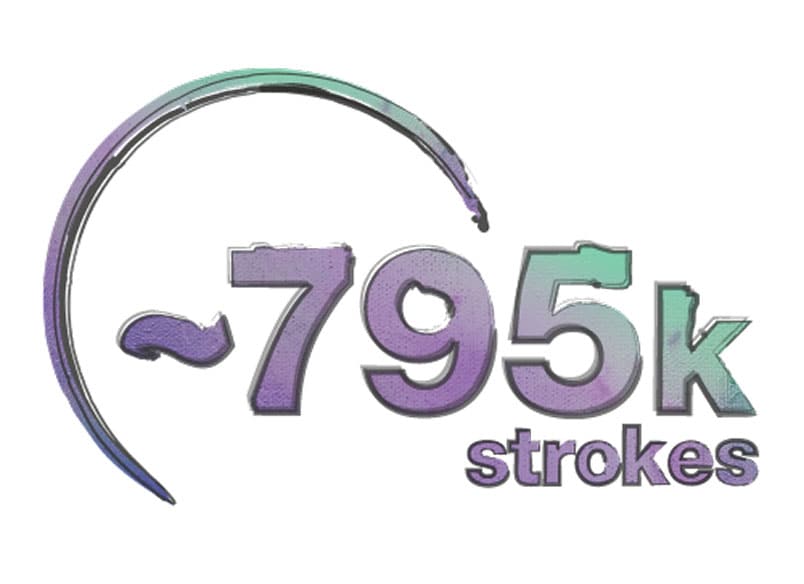
Every year in the US, there are an estimated 795,000 strokes and an estimated 163,000 deaths are due to strokes1*
Stroke is the fifth leading cause of death in the US and a major contributor to other co-morbidities.1 Stroke leaves an emotional imprint on survivors, their families, and care partners.2-5
*Incidence is based on Greater Cincinnati/Northern Kentucky Stroke Study and National Institutes of Neurological Disorders and Stroke data for 1999 that was compiled by the National Heart, Lung, and Blood Institute (NHLBI). Mortality is based on NHLBI tabulation using the National Vital Statistics System.
The burden of ischemic stroke
Most strokes are caused by clots that do not originate in the heart6
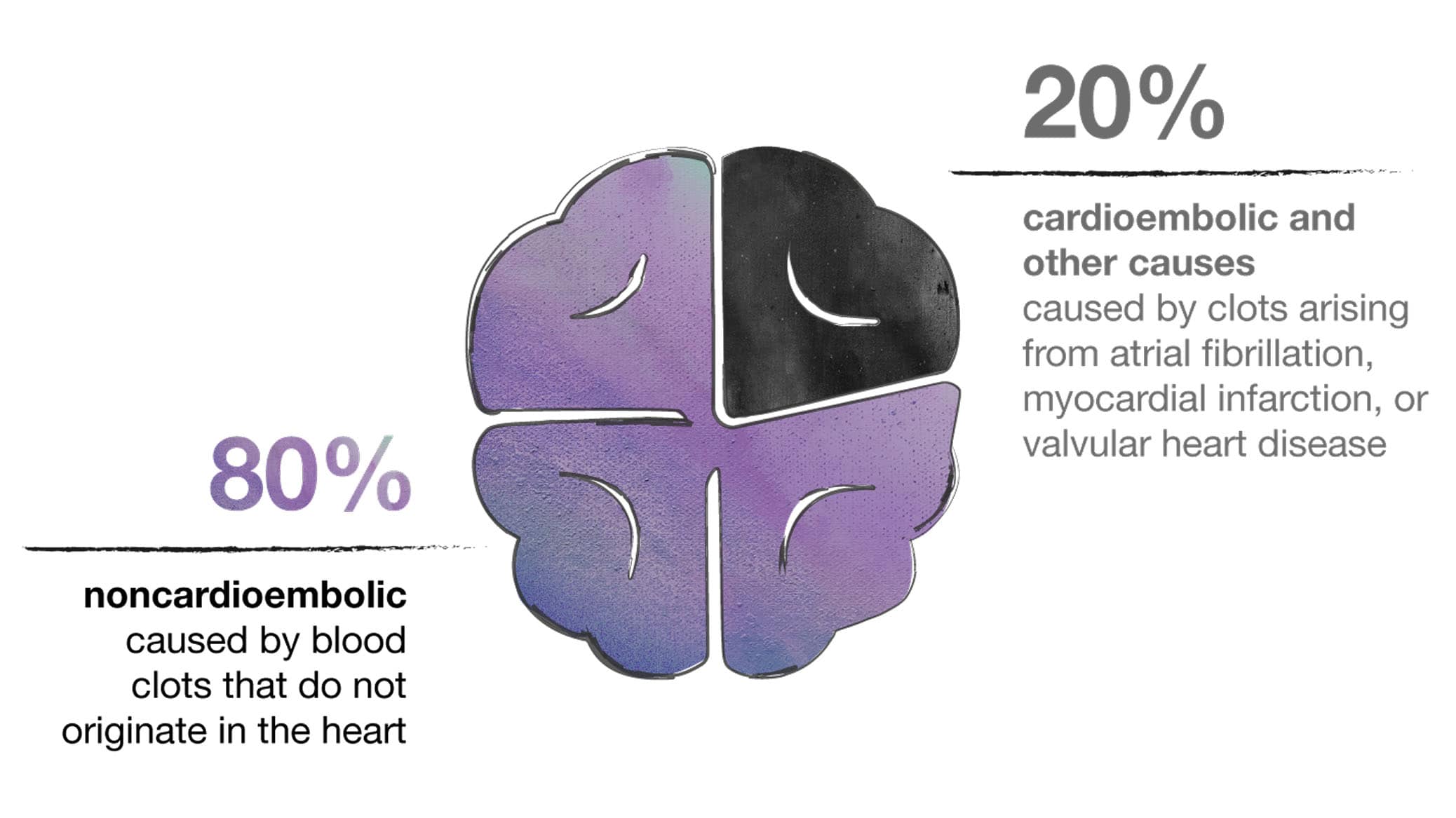
Acute ischemic strokes and transient ischemic attacks (TIA) occur when blood flow to part of the brain is reduced or blocked, typically due to a thromboembolism traveling to the brain or stenosis of a cerebral artery.7-9 This causes significant, often irreversible brain tissue damage—leading to short- and long-term mental and physical consequences that make stroke so damaging.7
Recurrent strokes are common
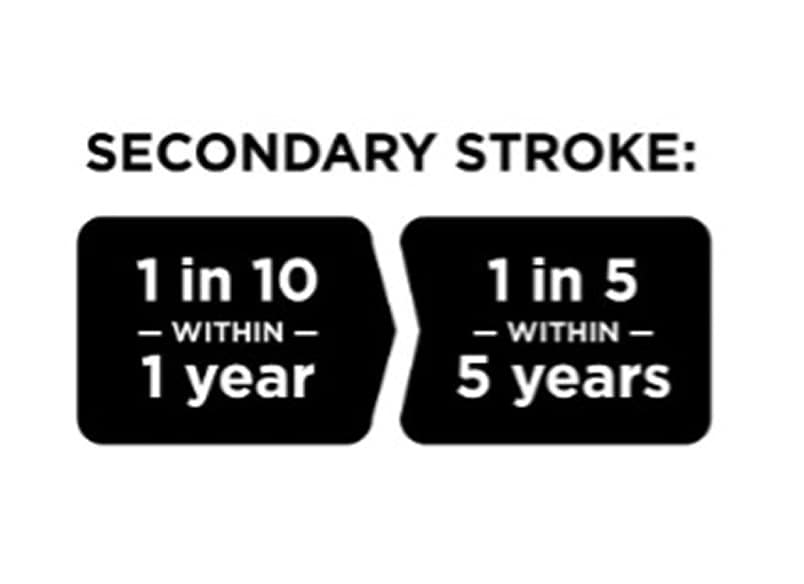
Approximately 1 in 5 ischemic stroke survivors will have another stroke within 5 years, and ~1 in 10 will have another stroke within 1 year.10-12
Recurrent and more severe ischemic strokes tend to be more disabling.1
Recurrence of ischemic stroke significantly increases the risk of death13
While standard secondary prevention strategies have improved recurrence rates, death from recurrent stroke is still a risk.13
Age, race, and socioeconomic factors affect the rates of stroke recurrence14-16
The risk of secondary stroke increases in marginalized groups, who may suffer disproportionately from healthcare inequity. Older people, Black adults, and those of low socioeconomic status all have an increased risk of suffering a second stroke.14-16
According to an observational study (N=3816) in Cincinnati, Ohio, socioeconomic and health inequities likely contributed to higher prevalence of risk factors.16
Secondary stroke deserves another look
About 1 in 5 ischemic stroke survivors will have another stroke within 5 years.10,11 And a secondary stroke may be more disabling, or even fatal.1 It's time to take another look.



- Martin SS, et al. Circulation. 2024;149(8):e347-e913.
- Liu L, et al. PLoS Med. 2023;20(3):e1004200.
- Rafsten L, et al. J Rehabil Med. 2018;50:769-778.
- Janssen EPJ, et al. J Psychosom Res. 2024;187:111914.
- Broomfield NM, et al. J Neurol Neurosurg Psychiatry. 2022;93:886-894.
- Schneck MJ. Cardioembolic stroke. June 7, 2021. Accessed November 16, 2021. https://emedicine.medscape.com/article/1160370-overview
- Kuriakose D, Xiao Z. Int J Mol Sci. 2020;21:7609.
- Bir S, Kelley RE. Biomedicines. 2021;9:1906.
- Guzmán JD. Neurologia. 2012;27(Suppl 1):4-9.
- Kolmos M, et al. J Stroke Cerebrovasc Dis. 2021;30(8):105935.
- Lakshminarayan K, et al. Stroke. 2011;42(6):1556-1562.
- Wang Y, et al. PLoS ONE. 2023;18(8):e0289790.
- Chen C, et al. Ann Neurol. 2024;96:332-342.
- Albright KC, et al. Neurology. 2018;91(19):e1741-e1750.
- Becker CJ, et al. Neurology. 2024;102(11):e209423.
- Robinson DJ, et al. Neurology. 2022;99(22):e2464-e2473.